
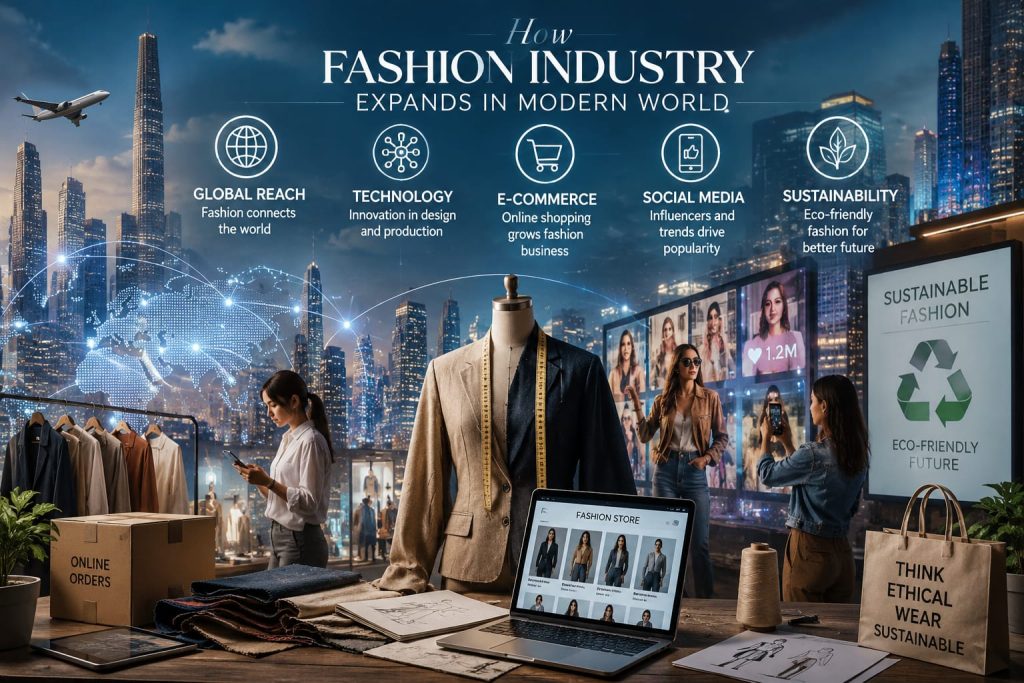
- First Impression aur Fashion ka Badalta Daur
Aaj ke samay mein fashion sirf kapde pehnna nahi hai, balki khud ko duniya ke samne behtar aur confident tarike se pesh karne ka zariya hai. Jaise kehte hain na—”First impression is the last impression.” Har koi apne unique style se logon ka dhyan apni taraf khinchna chahta hai.fashion industry- First Impression
- Neat Appearance – Clean and well-dressed people make a good first impression.
- Confidence – Good clothing can increase confidence.
- Personal Style – Fashion shows a person’s personality.
- Positive Image – Good dressing creates a positive image.
- Changing Fashion (Fashion ka Badalta Daur)
- New Trends – Fashion trends change every year.
- Social Media Influence – Social media spreads new fashion trends quickly.
- Celebrity Influence – People follow the style of celebrities and influencers.
- Comfort and Style – Today, people prefer clothes that are both comfortable and stylish.
- Sustainable Fashion – Eco-friendly and recycled clothing is becoming more popular.
- Online Shopping – E-commerce makes it easy to buy the latest fashion.
- Sustainability: Quality Over Quantity
Ab log blind shopping nahi kar rahe hain, balki planet aur artisans (karigaron) ka samman kar rahe hain.
Market Growth: Sustainable fashion market 2025 mein $11.3 billion se badhkar 2034 tak $28 billion hone ki umeed hai.
Gen Z & Millennials: 73% young consumers ab wahi brands chun rahe hain jinke paas verified sustainability credentials hain.- Choose Quality – Buy better-quality clothes that last longer.
- Buy Less, Wear More – Fewer clothes with more uses help reduce waste.
- Eco-Friendly Fashion – Choose products made from sustainable materials.
- Timeless Style – Classic designs stay fashionable for years.
- Reduce Waste – Buying only what you need helps protect the environment.
- Smart Shopping – Focus on value, not just the number of items.
- Purane Rules Khatam: Freedom of Expression
Pahle har event ke liye rules fix hote the—Gala matlab floor-length gown, formal dinner matlab stiff suit. Par aaj ki generation ne in rules ko mod diya hai. Ab kapde kisi mold mein fit hone ke liye nahi, balki apni real personality ko dikhane ke liye pehne jaate hain.- Fashion Has No Rules – People can wear what they like.
- Express Your Style – Clothing reflects your personality.
- No Limits – Fashion gives everyone the freedom to express themselves.
- Renting Trend: Samajhdari aur Sasta Choice
Log ab ek baar pehne jaane wale mehenge kapdon par paise waste nahi karna chahte.
New Mindset: Lagbhag 60% log ab formal event ke kapde khareedne ke bajaye rent (kiraye) par lena pasand karte hain.
Ab sawaal ye nahi hai ki “Mai kaisa dikhunga?”, balki ye hai ki “Mai kaisa mahsus karna chahta hu? - Gender-Neutral Fashion: No Boundaries
Modern fashion industry ab purani boundary ko tod raha hai, kyunki kapdon ka koi gender nahi hota.
Gen Z Choice: 60% Gen Z shoppers gender-neutral apparel brands ko priority dete hain.
Market Trend: Ye market 2034 tak $10 billion ko paar karne wala hai, jo dikhata hai ki fashion industry ab identity ko fully explore karne ki aazadi de raha hai.- Fashion Has No Rules – People can wear what they like.
- Express Your Style – Clothing reflects your personality.
- Break Old Trends – Modern fashion welcomes new ideas
- No Limits – Fashion gives everyone the freedom to express themselves.
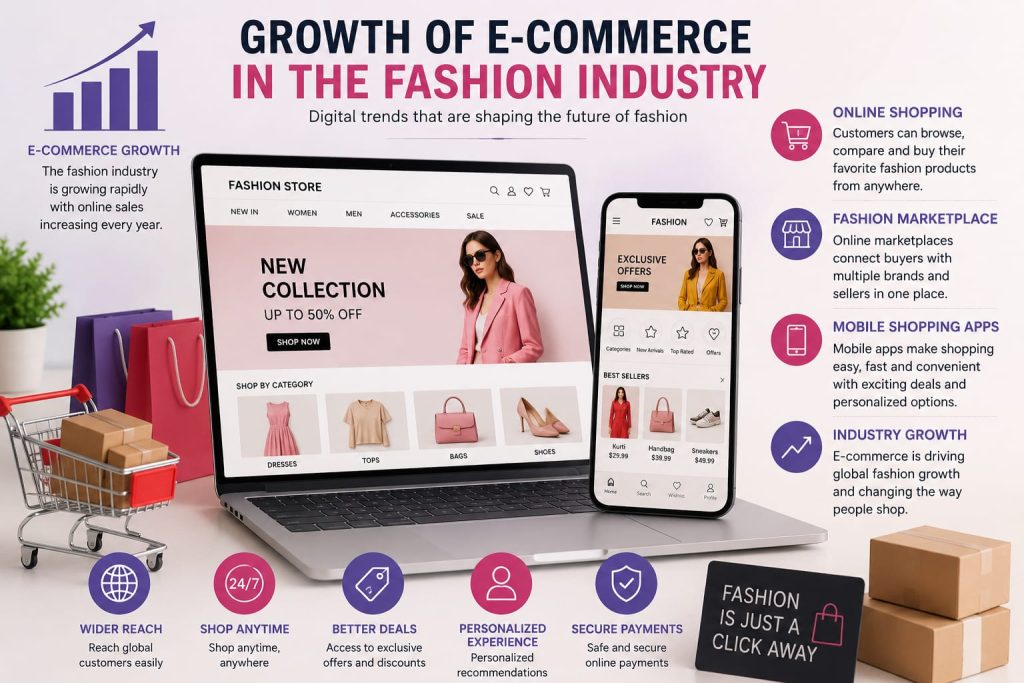
Growth of e-commerce the fashion industry
The fashion industry has changed as a result of e-commerce’s explosive growth, which has made it simpler for customers to purchase apparel, accessories, and shoes from anywhere in the world. Customers can compare designs and brands without going to physical locations because to the thousands of products, affordable prices, and easy shipping choices offered by online fashion retailers. E-commerce is becoming one of the main forces behind the current fashion business as smartphone usage and internet access continue to rise.
Online Shopping
The way consumers purchase fashion items has altered as a result of online shopping. In just a few minutes, customers can compare prices, peruse the newest collections, read product reviews, and place purchases. Features like quick shipping, simple returns, and safe online payments have boosted customer confidence and encouraged more individuals to shop online rather than in physical stores.
Fashion Marketplaces
Fashion marketplaces provide consumers a large selection of goods in one location by bringing together numerous brands and vendors on a single platform. These platforms make it simple to uncover the newest fashion trends, compare pricing, and discover new brands. Fashion marketplaces help businesses expand their online presence by giving them access to a wider consumer base without requiring them to develop their own e-commerce platform.
Mobile Shopping Apps
Mobile shopping applications have transformed the fashion retail experience, making it quicker and more convenient than it has ever been. With just a few taps, shoppers can explore collections, receive tailored recommendations, monitor their orders, and access exclusive discounts. Numerous fashion apps also utilize artificial intelligence (AI) to recommend items based on users’ browsing habits and preferences, enhancing the shopping experience. As mobile commerce continues to rise, shopping apps significantly contribute to the growth of the global fashion market.
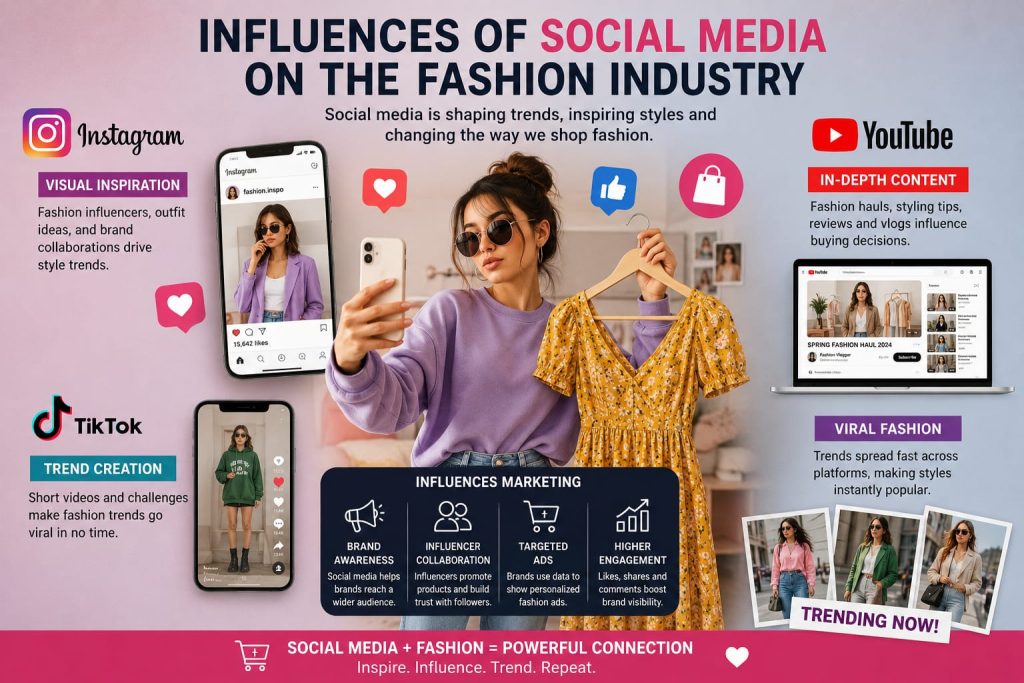
Influence of social media on the fashion industry
social media aaj ke fashion industry ko aage badhane wale sabse bade karkon mein se ek ban gaya hai. Instagram, TikTok aur YouTube jaise platform brands ko apne naye collection dikhane, grahakon se judne aur duniya bhar mein lakhon logon tak pahunchne ka mauka dete han. yeh platform fashion trends ko tezi se failane aur grahakon ke kharidari ke faislon ko prabhavit karne mein madad karte han.
Instagram TikTok and youtube
Instagram, TikTok, and YouTube are very popular social media platforms. They help fashion brands show their products to people all over the world.
- Instagram is used to share photos, reels, and stories of new fashion products.
- TikTok is famous for short videos. Many fashion trends become popular quickly through TikTok.
- YouTube is used for fashion videos, product reviews, styling tips, and unboxing videos.
Influencer Marketing
- Influencer marketing is a way to promote fashion products.
- Fashion brands work with social media influencers.
- Influencers show or wear the brand’s products in their posts and videos.
- Their followers trust their opinions and recommendations.
- Many people buy products after watching influencer reviews.
- This helps brands reach more customers.
Viral Fashion Trends
- Viral fashion trends become popular very quickly on social media.
- Platforms like Instagram, TikTok, and YouTube help trends spread fast.
- People share fashion videos, photos, and styling ideas.
- Hashtags and viral challenges make new styles popular.
- Many people try these new fashion trends.
- This helps fashion brands reach more customers.
- Viral trends increase brand popularity and sales.
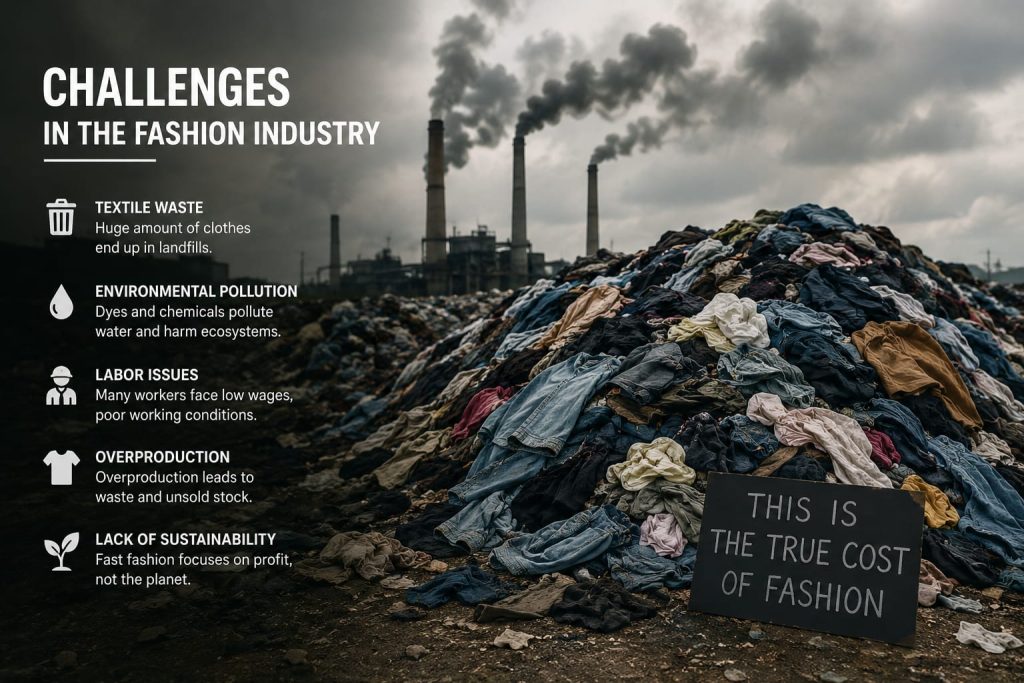
Challenges in the Fashion Industry
- Competition
Many fashion brands sell similar products. Companies must create new designs and offer good prices to attract customers. - Counterfeit Products
Fake products are sold in the market. They reduce the sales of original brands and can confuse customers. - Environmental Concerns
The fashion industry can cause pollution and waste. Many companies now use eco-friendly materials to help protect the environment.- Pollution – Factories can pollute air and water.
- Waste Generation – A lot of clothes and plastic are thrown away.
- Water Usage – Making clothes uses a lot of water.
- Chemical Pollution – Harmful chemicals from factories damage nature.
- Climate Change – Factories and transport increase carbon emissions.
- Recycling – Recycling clothes helps reduce waste.
- Eco-Friendly Products – Using organic and recycled materials protects the environment.
.